
Last-mile delivery is where logistics plans meet reality, and reality in Canadian cities is rarely straightforward. Traffic patterns, delivery window restrictions, building access issues, urban density, and the sheer scale of Canada’s major metro areas combine to make the final leg of a shipment’s journey one of the most operationally complex and cost-intensive parts of the entire chain. We’ve been moving freight across Canada for over 50 years, operating out of Toronto, Vancouver, and Calgary, and the last-mile problem is something every shipper working in those corridors eventually has to solve. The difference between businesses that manage it well and those that don’t usually comes down to planning, carrier relationships, and how realistically they’ve mapped the actual conditions on the ground.
Here is an honest look at what makes last-mile so difficult in Canada, and what actually works.
Why Last-Mile Costs So Much More Than the Distance Suggests
The economics of freight are straightforward on a long-haul run: more distance, proportionally more cost. Last-mile breaks that model entirely.
The final few kilometres of an urban delivery can account for anywhere from 30 to 50 percent of total shipment cost, depending on the route, the cargo, and the delivery conditions. Why? Because every stop is unique. A long-haul driver moves a full load from point A to point B. A last-mile driver navigates traffic, locates the delivery address, waits for dock access, manages paperwork at the door, and then does it again, sometimes dozens of times on a single route.
Failed delivery attempts compound the problem. A missed delivery doesn’t disappear from the ledger. It generates a redelivery cost, a potential storage cost, and often a customer service issue that takes more time to resolve than the original delivery would have.
The Urban Density Problem: Toronto, Vancouver, and Calgary Are Not the Same City
Canadian shippers often underestimate how differently last-mile plays out across the country’s three major urban centres. Treating them as interchangeable is a planning error with real cost consequences.
Toronto and the GTA present a density-and-sprawl paradox. The urban core has restricted truck access on many streets, aggressive parking enforcement, and building delivery windows that vary by property. The surrounding GTA is vast, meaning routes that look short on a map can take significantly longer due to highway congestion, particularly on the 401 corridor.
Vancouver is constrained by geography in ways Toronto and Calgary are not. Mountains, water crossings, and a compressed urban footprint mean that routing options are genuinely limited, and congestion in the Lower Mainland can make delivery windows unpredictable regardless of how well a route is planned.
Calgary has a different profile: lower density overall, but extreme weather variability that affects last-mile reliability in winter months more severely than in either coastal or southern Ontario markets.
Access and Infrastructure Constraints That Drivers Face Daily
Urban delivery in Canada isn’t just slow. It’s physically constrained in ways that require advance planning rather than improvisation on the day of delivery.
Common access challenges include:
- Loading dock availability and booking windows that are specific to each building, particularly in multi-tenant commercial and industrial properties
- Low-clearance underpasses and bridge height restrictions on secondary streets
- Residential neighbourhood truck restrictions in Toronto and Vancouver that limit delivery hours to specific windows
- Narrow laneways and limited manoeuvring space in older industrial areas of all three cities
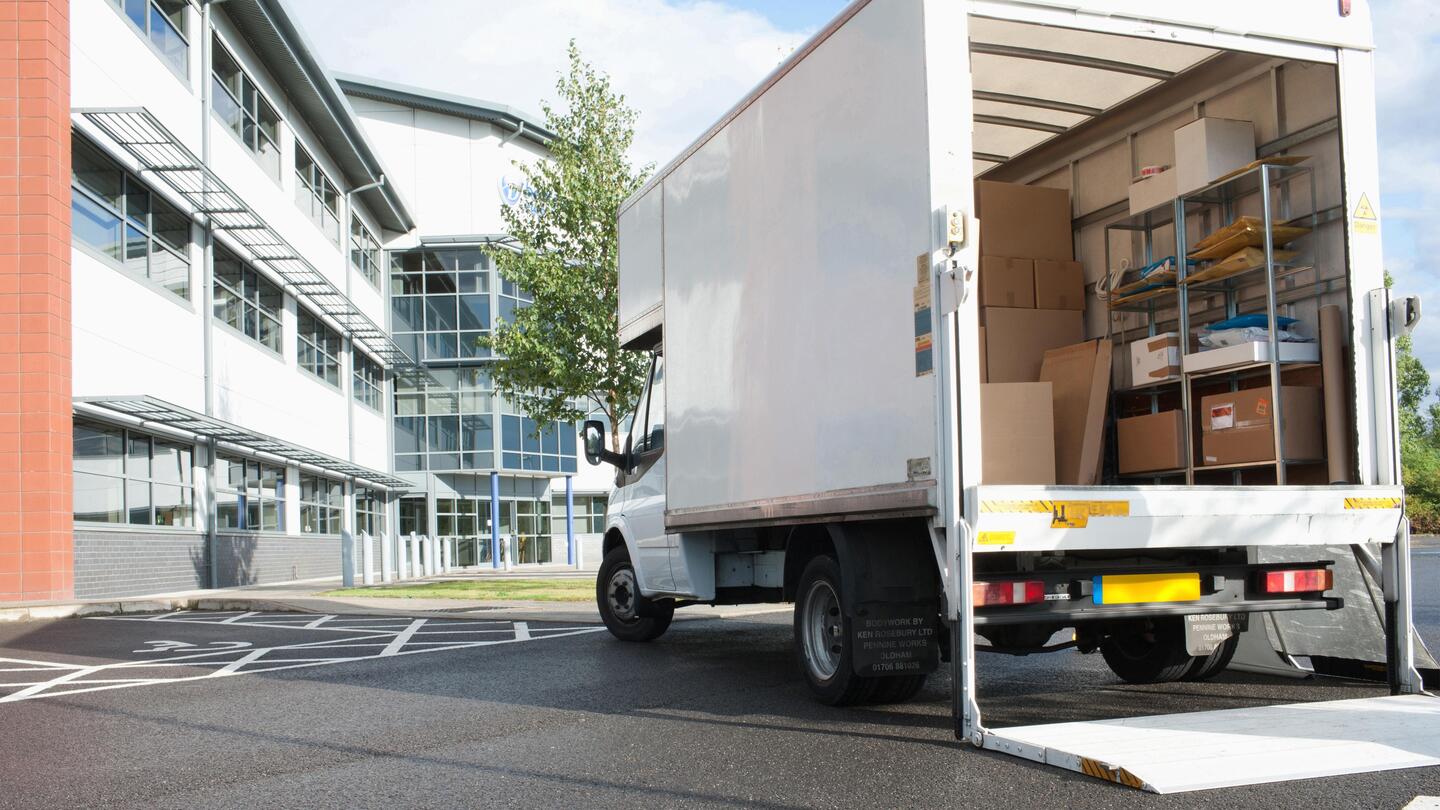
The practical answer to most of these constraints is the same: the driver needs accurate, current information before arriving, not when they’re already at the address. Carriers and logistics teams that handle appointments, confirm dock access requirements, and manage tailgate or liftgate needs proactively are the ones that actually hit delivery windows.
The LTL Factor: Consolidation and Its Trade-offs
Less-than-truckload freight creates a specific last-mile challenge that full truckload shippers don’t face to the same degree.
An LTL shipment shares a trailer with other freight, which means the delivery route serves multiple stops in sequence. The order of those stops, the total volume on the truck, and how well the load was organized at origin all affect how smoothly each individual stop goes. A delay at one address ripples through every delivery that follows it.
For shippers sending LTL freight into major Canadian cities, the quality of the carrier’s local route knowledge and their process for managing appointment freight, short-notice access changes, and multi-stop sequencing has a direct and visible impact on whether the shipment arrives when it was supposed to.
Daily team and expedited services, combined with carriers that handle appointment freight and dropped trailers as a standard capability rather than an exception, reduce the variability that makes LTL last-mile feel unreliable.
How Warehousing Positioning Changes Last-Mile Entirely
One of the most effective last-mile strategies doesn’t involve the final delivery leg at all. It involves where inventory is positioned before the delivery leg begins.
A business shipping into Toronto from a warehouse in Calgary is always going to face longer lead times, higher transportation costs, and less flexibility on last-minute adjustments than a business with inventory already in the GTA. The same principle applies across all three major markets. When inventory is held at a full-service warehouse terminal in or near the destination city, the last-mile leg starts closer to the end customer, shortens the delivery window, and gives the shipper more control over timing.
Building a Last-Mile Strategy That Actually Performs
Solving last-mile in Canadian cities is not about finding a single tactic. It requires aligning several operational decisions that compound on each other.
The first is carrier selection: working with a logistics provider that covers major Canadian cities with daily service, handles appointments, tailgates, dropped trailers, and short-term storage as standard, and tracks shipments daily with a team that can respond directly when something changes on the day of delivery.
The second is inventory positioning: holding stock in the markets you serve most frequently so that last-mile starts from a realistic distance rather than a long-haul origin.
We operate full-service warehousing in Toronto, Vancouver, and Calgary, with FTL, LTL, and intermodal capabilities across Canada and into the US. Our team handles the requirements that make urban delivery actually work: appointments, tailgates, dropped trailers, and daily tracking on every shipment. For businesses serious about last-mile performance in Canadian cities, that combination of local presence and national reach is where the solution starts.
Ready to improve your last-mile delivery performance? Request a quote or contact our team.




 imunify-bot-check