
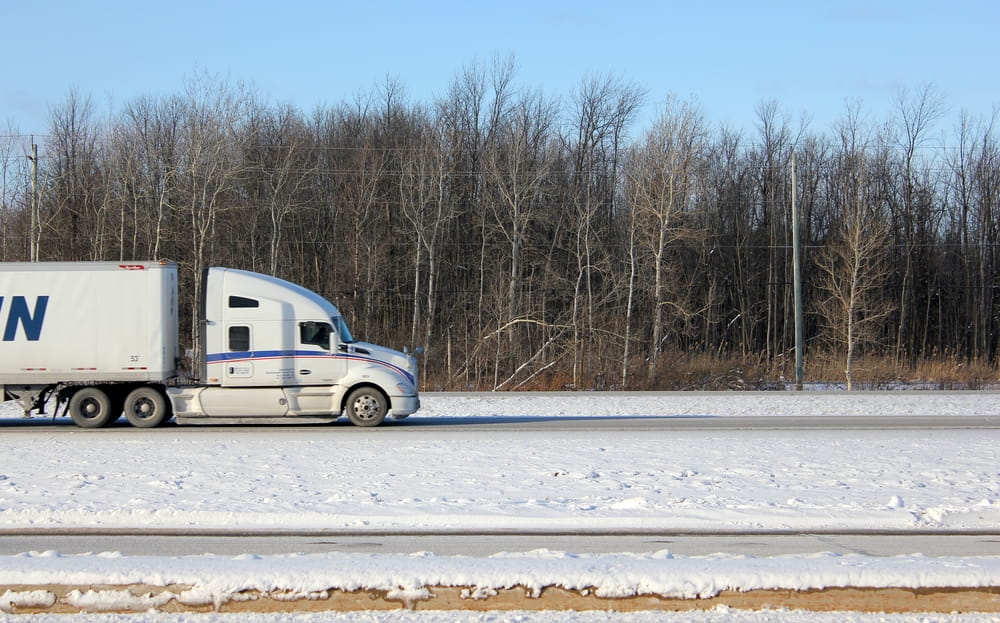
Cold chain logistics is one of the most demanding disciplines in freight, and in Canada, it’s also one of the most consequential. From pharmaceuticals and biologics to food and beverage, agricultural products to industrial chemicals, a significant portion of what moves through Canadian supply chains requires some form of temperature control. The stakes are high: a break anywhere in the chain doesn’t just mean a delayed shipment. It can mean spoiled product, regulatory non-compliance, financial loss, and in some sectors, a genuine risk to public safety. We’ve been moving freight across Canada for over 50 years, and the businesses that manage cold chain well are the ones that treat temperature integrity as a logistics design problem rather than an afterthought.
Here’s what every Canadian business handling temperature-sensitive goods needs to understand.
What Cold Chain Logistics Actually Means
“Cold chain” is a shorthand for something more precise: an unbroken sequence of temperature-controlled environments that a product moves through from origin to destination.
That sequence typically includes:
- Temperature-controlled storage at the point of manufacture or consolidation
- Refrigerated or heated transport between origin, distribution points, and final delivery
- Monitoring and documentation at every transfer point to verify that conditions were maintained
- Compliant handling procedures at loading, unloading, and cross-docking stages
The “chain” framing matters. Every link is only as strong as the weakest one. A product that is stored correctly but loaded onto an unqualified trailer, or that travels in a reefer unit that wasn’t pre-conditioned, has already had its integrity compromised, even if it arrives looking fine.
Canada’s Climate: A Logistics Variable You Can’t Ignore
Canada’s geography and weather introduce cold chain variables that don’t exist in most other markets.
In winter, the challenge is not just keeping warm-sensitive products warm. It’s preventing freeze damage in transit on lanes where ambient temperatures can drop well below -20°C across the Prairies and northern routes. In summer, the reverse problem appears: maintaining refrigerated conditions in freight vehicles operating through peak heat, particularly in urban areas where dwell times and traffic delay heat exposure.
The span between Vancouver’s temperate coast, Calgary’s deep-freeze winters, and Toronto’s humid summers means that a single cross-Canada lane can pass through multiple climate zones in one trip, each with different risks for the cargo inside.
Canada’s vast geography also means that transit times on cold chain lanes are long. A move from Vancouver to Toronto via truck covers roughly 4,400 kilometres. Every additional hour in transit is another hour that temperature control must be actively maintained, which raises both the equipment requirements and the monitoring burden for carriers and shippers alike.
The Equipment Side: What Temperature-Controlled Transport Involves
Not all refrigerated transport is the same, and understanding the equipment spectrum matters when you’re specifying how your freight needs to move.
Reefer trailers are the standard for most frozen and refrigerated freight: mechanically cooled units capable of holding set-point temperatures across a wide range, from frozen to chilled. The quality of the equipment, the calibration of the thermostat, and the pre-cool procedure before loading all affect whether the set-point is actually maintained throughout the move.
Heated trailers serve the opposite need: protecting cargo from freeze damage in cold-weather transit. This is particularly relevant for products like certain pharmaceuticals, beverages, and agricultural goods that cannot be exposed to sub-zero temperatures.
Insulated trailers without active climate control are used for shorter moves where passive protection is sufficient, though these carry more risk on longer lanes or in extreme ambient conditions.
Monitoring, Documentation, and Regulatory Compliance
Temperature monitoring is where cold chain logistics intersects directly with regulatory obligation for many Canadian industries.
Pharmaceuticals distributed in Canada are subject to Health Canada’s Good Distribution Practices, which require documented evidence of temperature excursion monitoring throughout the supply chain. Food products moving through CFIA-regulated categories have their own traceability and temperature documentation requirements.
The practical implication: it is not enough to use the right equipment. Shippers need to be able to demonstrate, with data, that the right temperature conditions were maintained from origin to destination. That means data loggers, temperature records tied to specific shipment identifiers, and real-time monitoring that flags excursions during transit rather than after delivery.
Where Cold Chain Breaks Down: The Most Common Failure Points
Understanding where cold chain integrity is most at risk helps shippers design procedures that prevent failures rather than just document them.
The highest-risk moments in a cold chain move are the transfer points: loading docks, cross-docking facilities, and transload operations where product moves between environments. Dock exposure time during loading and unloading, particularly in summer, can cause significant temperature drift if procedures aren’t followed rigorously.
Other common failure points include:
- Inadequate pre-conditioning of trailers before loading (a reefer that hasn’t reached set-point temperature before product is loaded starts behind)
- Poor load configuration that blocks airflow inside the trailer, creating hot or cold spots
- Carrier and driver changes mid-route where temperature monitoring handoff procedures are unclear
- Incomplete or delayed communication when an excursion is detected, allowing a problem to compound rather than being addressed in real time
Building a Cold Chain Strategy That Holds
A cold chain is only as reliable as the planning behind it. For Canadian businesses, that planning needs to account for lane-specific climate risks, regulatory documentation requirements, equipment selection, carrier qualification, and contingency procedures when something goes wrong.
The foundation is carrier selection. Temperature-controlled freight should move with carriers and logistics partners that have the right equipment, including heated and reefer capacity across a full range, and the daily tracking and communication infrastructure to respond quickly when conditions change. Seamless coordination at ports and border crossings matters particularly for cold chain imports and exports, where customs delays can translate directly into temperature exposure risk.
We handle temperature-controlled shipments across Canada, the US, and Mexico, with access to a full range of equipment including heated and reefer units, tracked daily by our team and supported by our network of 50+ carrier relationships through TFI International. Whether it’s a truckload move on a single lane or a more complex multi-leg freight solution, we build cold chain handling into the coordination from the start, not as a checkbox, but as a core part of how the shipment is planned and executed.
Moving temperature-sensitive freight? Request a quote or contact our team to discuss your cold chain requirements.





 imunify-bot-check