
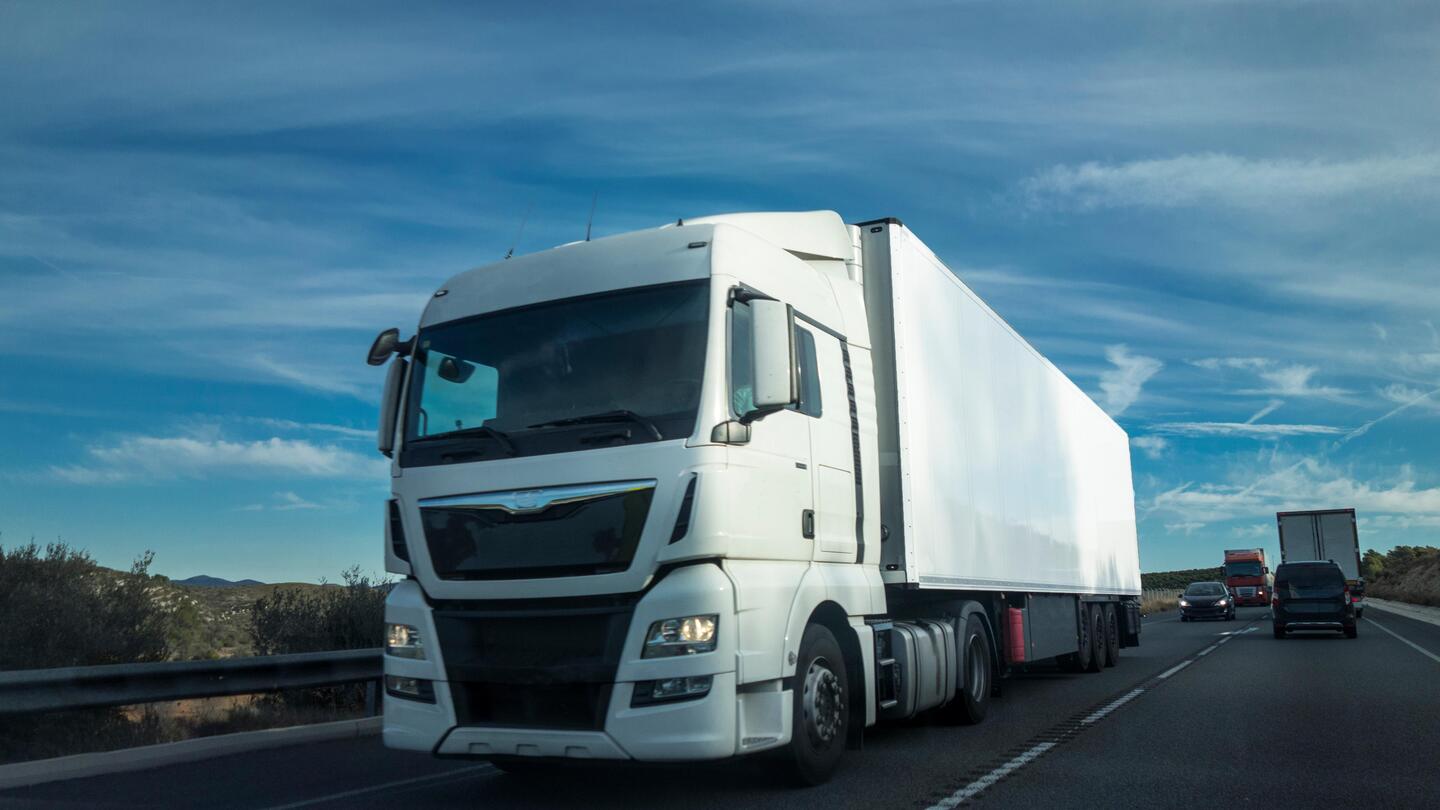
Sustainability is no longer a peripheral concern in Canadian freight. Corporate emissions reporting obligations, customer procurement requirements, ESG commitments, and federal climate policy are all converging on the same point: the way goods move through the supply chain has a measurable carbon cost, and increasingly, businesses are expected to account for it. We’ve been operating in Canadian freight for over 50 years, and the shift from sustainability as a values statement to sustainability as an operational requirement is one of the most significant changes reshaping how shippers think about their logistics decisions. The good news is that many of the most effective freight emissions strategies don’t require businesses to choose between environmental performance and commercial performance. In a well-designed supply chain, they reinforce each other.
Here is a grounded look at what Canadian shippers can actually do to reduce their freight carbon footprint.
Why Freight Emissions Deserve Serious Attention
Transportation is one of the largest contributors to greenhouse gas emissions in Canada. Road freight, which carries the majority of domestic commercial cargo, is responsible for a significant portion of the sector’s total output. For businesses with complex supply chains, freight can represent a material share of their total organizational emissions, often larger than what gets reported in early-stage sustainability assessments that focus on facilities and energy use.
The implication is direct: a company that has reduced emissions across its operations but hasn’t examined its freight program has left one of its biggest levers untouched.
Modal Shift: The Single Highest-Impact Lever
If there is one strategic decision that delivers more emissions reduction per kilometre than any other in freight, it is modal shift, specifically moving long-haul volume from truck to rail.
Rail freight generates significantly lower greenhouse gas emissions per tonne-kilometre than road freight. The gap is substantial: according to Transport Canada data, rail emits roughly 75 to 80 percent less GHG per tonne-kilometre than trucking on comparable long-haul routes. For shippers moving significant volumes across Canada’s major corridors, even a partial shift of long-haul freight to rail can produce meaningful emissions reductions at scale.
Intermodal shipping combines the economics and emissions profile of long-haul rail with truck pickup and delivery on both ends, providing door-to-door service across all major Canadian cities and the US without sacrificing the flexibility that shippers need at origin and destination. The transit time trade-off on longer lanes is real, but for freight that isn’t time-critical, it is one of the most practical emissions reduction moves available.
The businesses making the most progress on freight emissions aren’t waiting for perfect solutions. They’re identifying which lanes in their network can absorb a transit time trade-off and systematically moving that volume to lower-emission modes.
Load Optimization and Freight Consolidation
Every partially loaded truck on a Canadian highway represents emissions that aren’t carrying proportional commercial value. Load optimization and freight consolidation reduce the number of vehicle movements required to move a given volume of freight, which is one of the most cost-neutral ways to lower the carbon intensity of a freight program.
Less than truckload (LTL) consolidation pools multiple shippers’ freight into shared trailer space. For shippers whose volumes don’t justify a full trailer, LTL shipping is inherently more carbon-efficient than moving the same goods in a dedicated but partially loaded vehicle.
Freight consolidation at distribution points allows inbound shipments from multiple origins to be combined before the final leg, reducing the number of individual deliveries and the associated emissions from last-mile movement.
Carrier Selection and Equipment Standards
Not all carriers operate with the same emissions profile, and for shippers with sustainability commitments, carrier qualification should include an assessment of fleet standards alongside the usual service and price criteria.
Key considerations when evaluating carriers on environmental grounds:
- Fleet age and engine standards, since newer engines operating under current emissions regulations produce substantially less particulate matter and NOx than older fleets
- Adoption of aerodynamic equipment modifications, which reduce fuel consumption on long-haul routes
- Use of alternative fuel vehicles where available on specific lanes
- Participation in voluntary programs such as SmartWay, which provides standardized performance benchmarking for freight carriers in North America
For warehouse operations within the supply chain, the emissions profile extends beyond the trucks. Facilities that have transitioned from propane-powered handling equipment to electric alternatives eliminate a direct source of greenhouse gas emissions within their walls, an upgrade that applies at every handling point from port arrival through to distribution.
Carbon Reporting: Building the Data Foundation
Reducing freight emissions requires measuring them first, and measurement requires data that most shippers don’t currently collect in a structured way.
A freight carbon footprint calculation needs, at minimum: the weight and volume of shipments by lane, the mode used on each leg, the distance travelled, and the emissions factor applicable to that mode and carrier. Most logistics software can generate the shipment data. The emissions factor inputs require either carrier-reported data or industry-standard factors published by bodies such as Transport Canada or the GHG Protocol.
The practical starting point for most shippers is a baseline assessment: map the freight network, assign emissions factors to each lane and mode, and identify where the highest concentration of emissions sits. That exercise almost always reveals that a small number of high-volume lanes account for a disproportionate share of total freight emissions, which focuses the reduction effort where it will have the most impact.
Turning Freight Strategy Into Sustainability Performance
Freight sustainability is not a separate program sitting alongside the core logistics strategy. It is the outcome of logistics decisions made across the supply chain: which mode carries which lane, how freight is consolidated before it moves, which carriers operate the equipment, and how warehousing is positioned to rationalize outbound distribution.
The shippers who make the most consistent progress on freight emissions are those who treat the carbon cost of each logistics decision as a real input alongside time and price, rather than an afterthought applied after the fact.
We operate intermodal, FTL, LTL, and port-to-door services across Canada, the US, and Mexico, with full-service warehousing terminals in Toronto, Vancouver, and Calgary. Our facilities have transitioned from propane-powered forklifts to electric alternatives, eliminating warehouse-level tailpipe emissions across all three locations. Backed by our TFI International network of 50+ carrier relationships, we give shippers the modal flexibility and network reach to build freight programs that perform on both the commercial and environmental metrics that matter.
Ready to build a more sustainable freight strategy? Request a quote or contact our team.







 imunify-bot-check